

Today's news: a global first for three Belgian hospitals, which, together with element61, have developed an artificial intelligence application designed to help patients read their medical reports. The hospitals involved are the Antwerp hospital group ZAS, AZ Maria Middelares in Ghent, and UZ Brussels.
"This way, patients can understand much better what is going on," says Dr Mark Helbert (ZAS), who led the project from the Ziekenhuis aan de Stroom (ZAS).
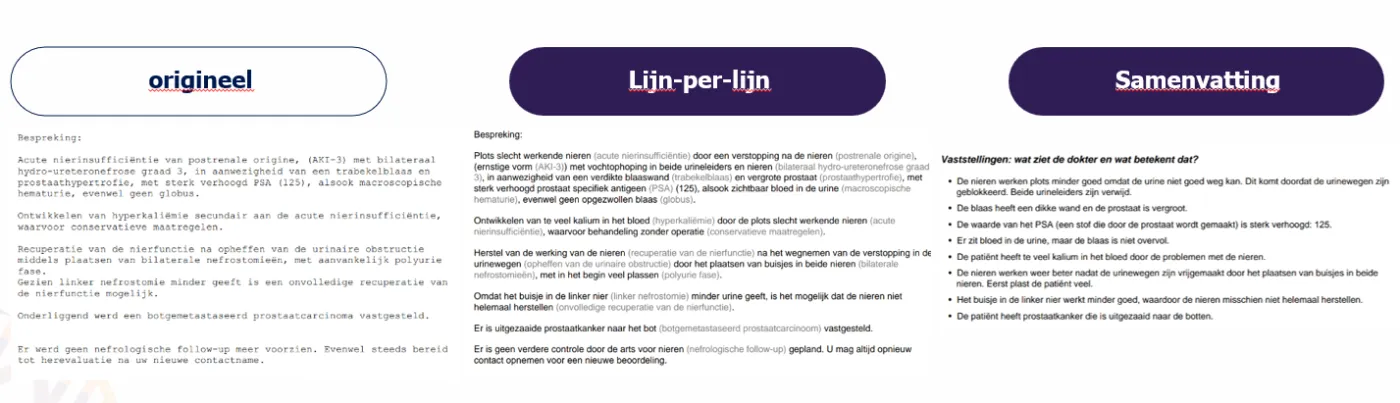
This concerns reports after a consultation and discharge letters following hospital admission. The application converts the texts into Dutch so that 80 percent of the population can understand. This allows patients to better grasp what is happening with their health, ask more targeted questions, and follow their treatment more closely.
The application also ensures that patients do not have to disclose their sensitive medical information to publicly available AI applications. According to ZAS, this is the first application where AI translates medical information into plain language and places it in the government portal for patients' health information.
In the first phase, this is available in three languages for patients with rheumatic and kidney diseases. This covers forty thousand letters per year. Later, ZAS will expand the application to other medical specialties—such as cardiology—and add more languages. The application was developed with financial support from the Federal Public Service Health.
AI that makes medical care truly understandable. That is no longer a dream.
At ZAS, an important barrier in healthcare is being demolished today. With a new AI application, complex doctors' reports are automatically translated into clear, simple Dutch, understandable for 80% of the population (language level B1).
Why this has such great social value:
- Understanding = better care
Research shows that patients who understand their health condition follow treatments better. This application therefore not only strengthens knowledge, but also therapy adherence and quality of care.
- A solid boost for patient literacy
Medical information is often peppered with jargon and difficult sentence constructions. By translating this into "human language", patients – and informal caregivers – finally get access to information they really understand. This makes them more assertive and strengthens shared decision-making.
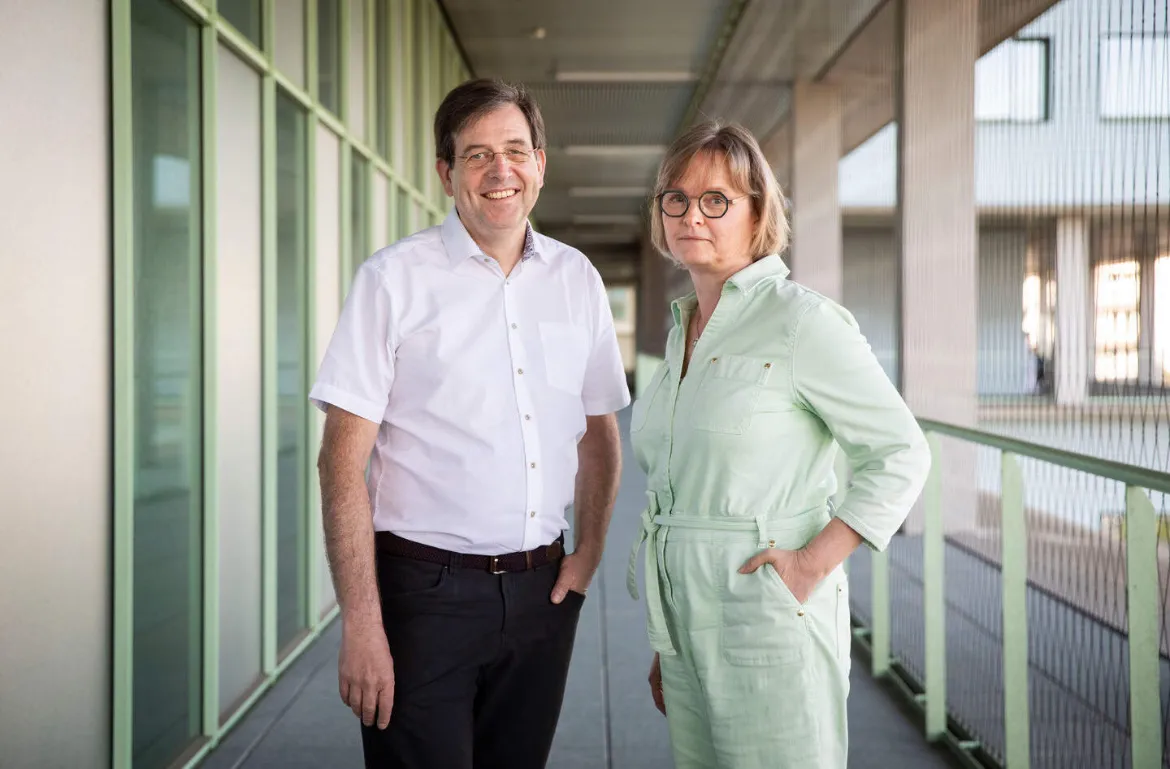
Mark Helbert - CMIO & Nephrologist & Ilse Hoffman - Rheumatologist at ZAS
- Patient rights put into practice
The law prescribes that medical information must be offered tailored to the patient. Thanks to AI, this can now be done in a scalable, secure and way, and without additional time constraints for doctors.
- Inclusive care
With support in multiple languages and a focus on comprehensibility for a diverse audience, this application contributes to more equal opportunities in healthcare.
- More than just technology
This is a textbook example of how AI, when carefully developed and embedded in a public context, can contribute to better care, more trust and stronger patient participation — without sacrificing correctness or privacy.
More information can be found via the following publications:
- ZAS maakt medische verslagen begrijpelijk met AI | Ziekenhuis aan de Stroom [ZAS]
- Ziekenhuizen laten patiënten hun medisch verslag lezen met behulp van AI | VRT NWS Nieuws
- ZAS rekent af met ingewikkelde doktersverslagen: “Dankzij AI kunnen we taalniveau van een 13-jarige gebruiken" | GVA
- ZAS rekent af met ingewikkelde doktersverslagen: “Dankzij AI kunnen we taalniveau van een 13-jarige gebruiken” | Nieuwsblad
If you’d like to learn more, feel free to reach out to us or contact Peter Depypere or Charles Cuigniez.